Originally published at braginskyoleg.com.
We interact with our colleagues every day. But do we do this in the most optimal way, making sure that our communication leads to expected results? With founder of School of Troubleshooter Oleg Braginsky and student Maksim Golub we will walk through the principles of how make such interactions effective.
Over the few years of experience and dozens of accomplished projects we observed few pattern that slowly but surely helped us to be clearer and precise with our colleagues, bosses and stakeholders. Given that we live in the age where the exchange of written messages prevails it is crucial to have principles to follow.
There is a saying “there is no silver bullet for everything”. It sounds nice, calming, and quite suitable. Every time you join a company or visit a client, you can hear that their setting or situation is specific. It’s true indeed if you in your career only met them. When you see different teams, industries it gives a perspective.
It’s not about silver bullet but an ability to structure data, turn it into information, then knowledge. And all these artefacts made of precious metal lie down at the end of each branch of the tree. Yes, there are exceptions, but only once. When you can identify them, they will take their designated place in a system.
The article will be structured not just to give you a list, but show exact examples of how the communication is being made or how the message should not be delivered. Seeing both sides helps to get the big picture and develop your own framework on building the bridges of flowing information with people you work with.
The actions will take a place in the imagined instant messenger channels. All the places, names and facts are the result of the authors` creative thinking, and not related to any person in a real world particularly, company or situation in a direct way, but built on the repeated patterns and may contain some Easter eggs.
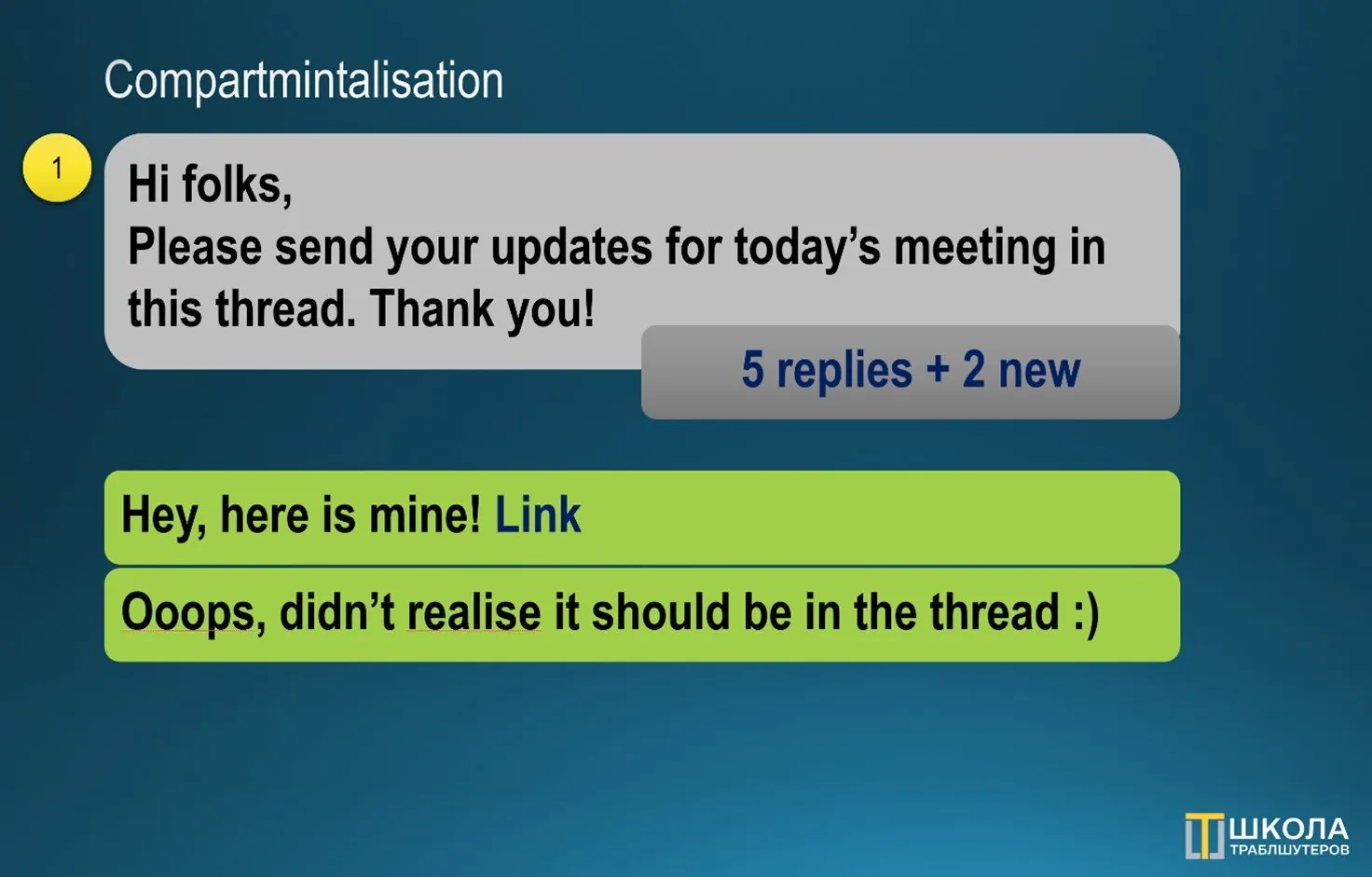
**Compartmentalisation. **Keep all the conversations in containers. Whether it’s a channel, theme, topic, but make sure you contain all the communications, artefacts in the same place. It saves time to get full the details and let people focus on solving the actual issue rather than searching for little pieces of data (1):
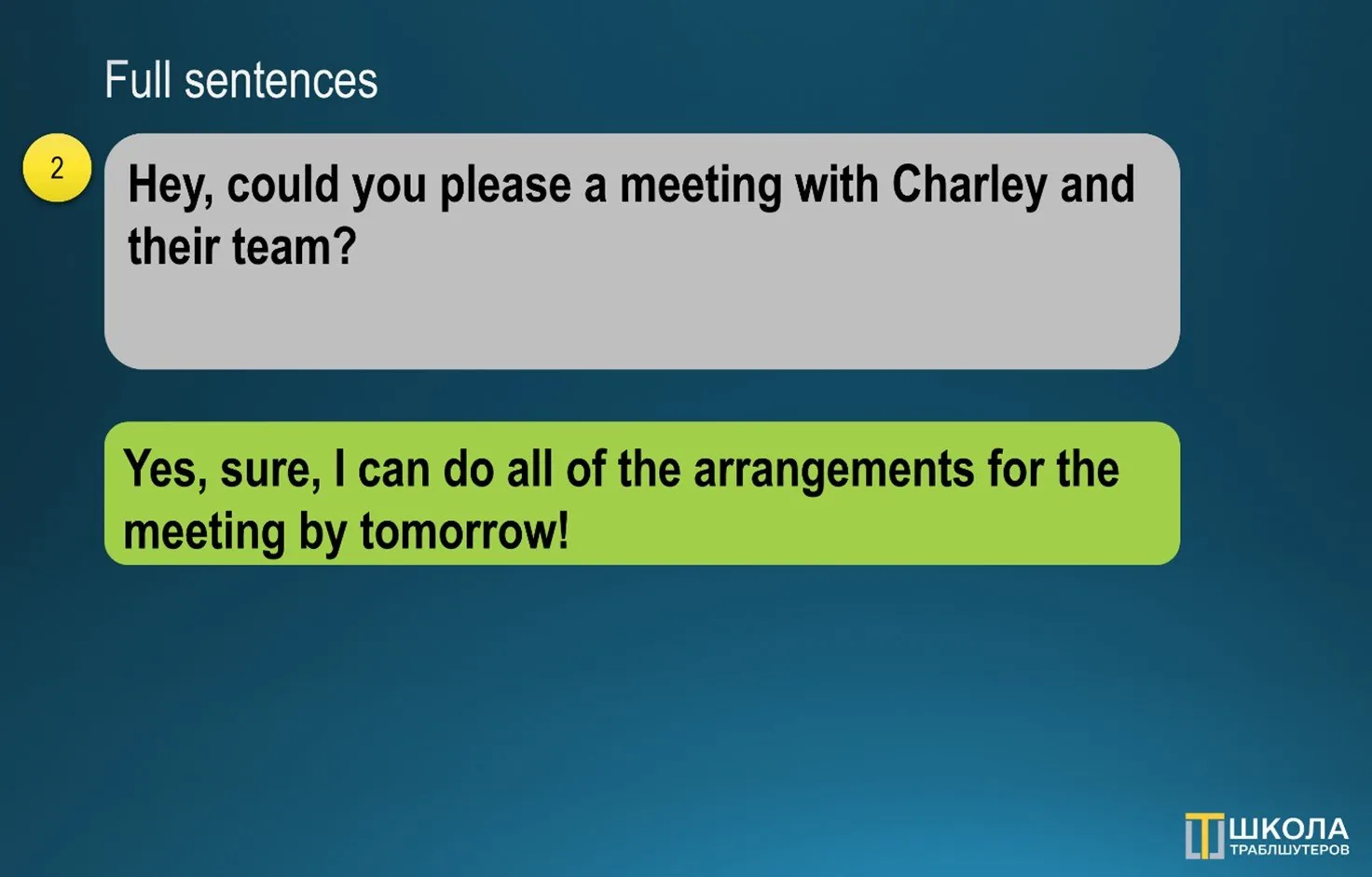
Full sentences. When we do start to work with other people, we may not get the full understanding of their background, context or even small nuances of interaction. The moment we respond in full sentence, providing the expanded explanation this adds a clarity and reduce the effort needed for the clarification (2):
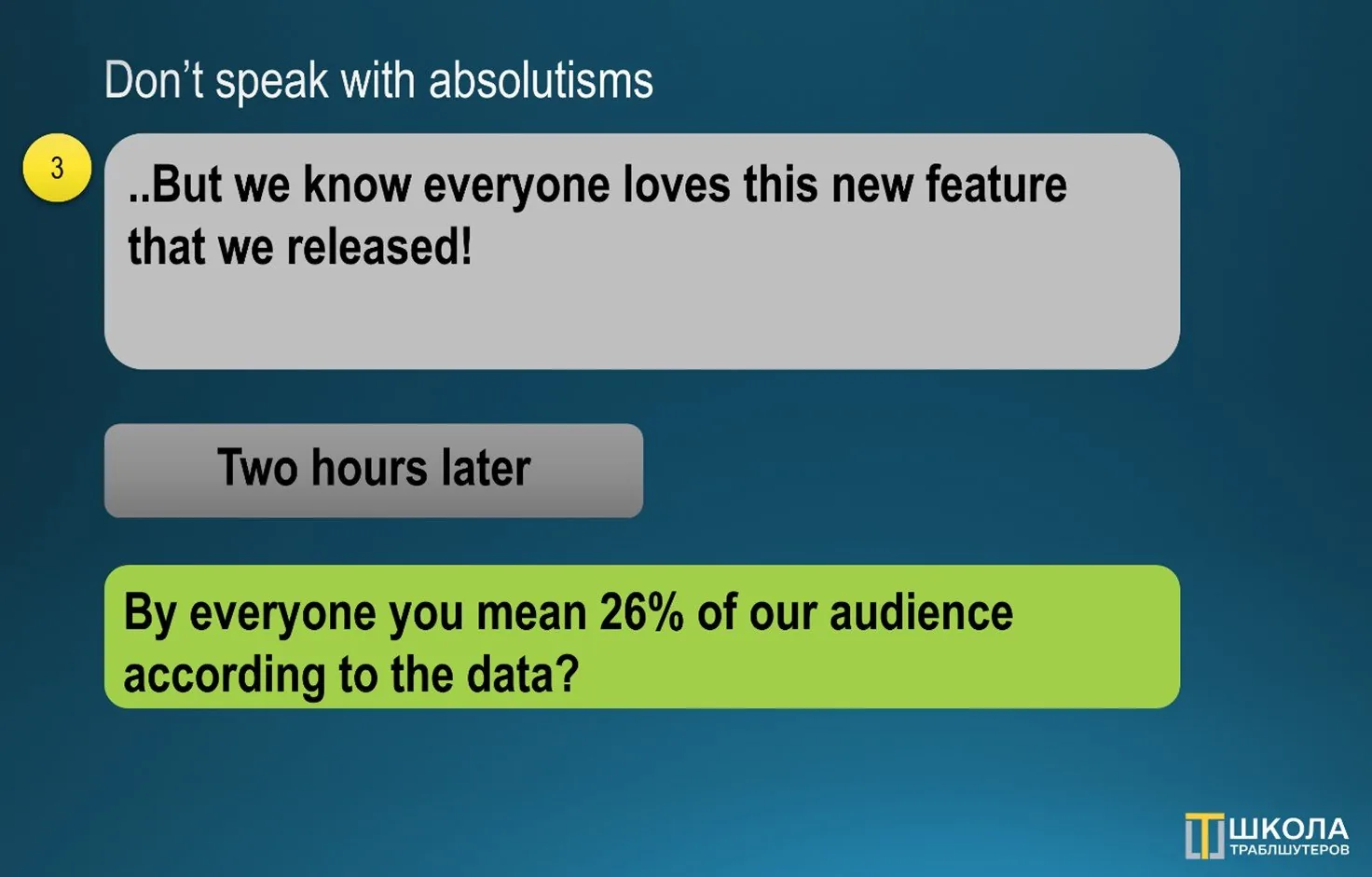
Don’t speak with absolutisms. When using words like “each”, “everyone”, “everything” we may think that it is simplification, but it is better to provide rather specific description, so that whoever will be processing this information will be aware what did you exactly meant to say avoiding making uneducated guesses (3):
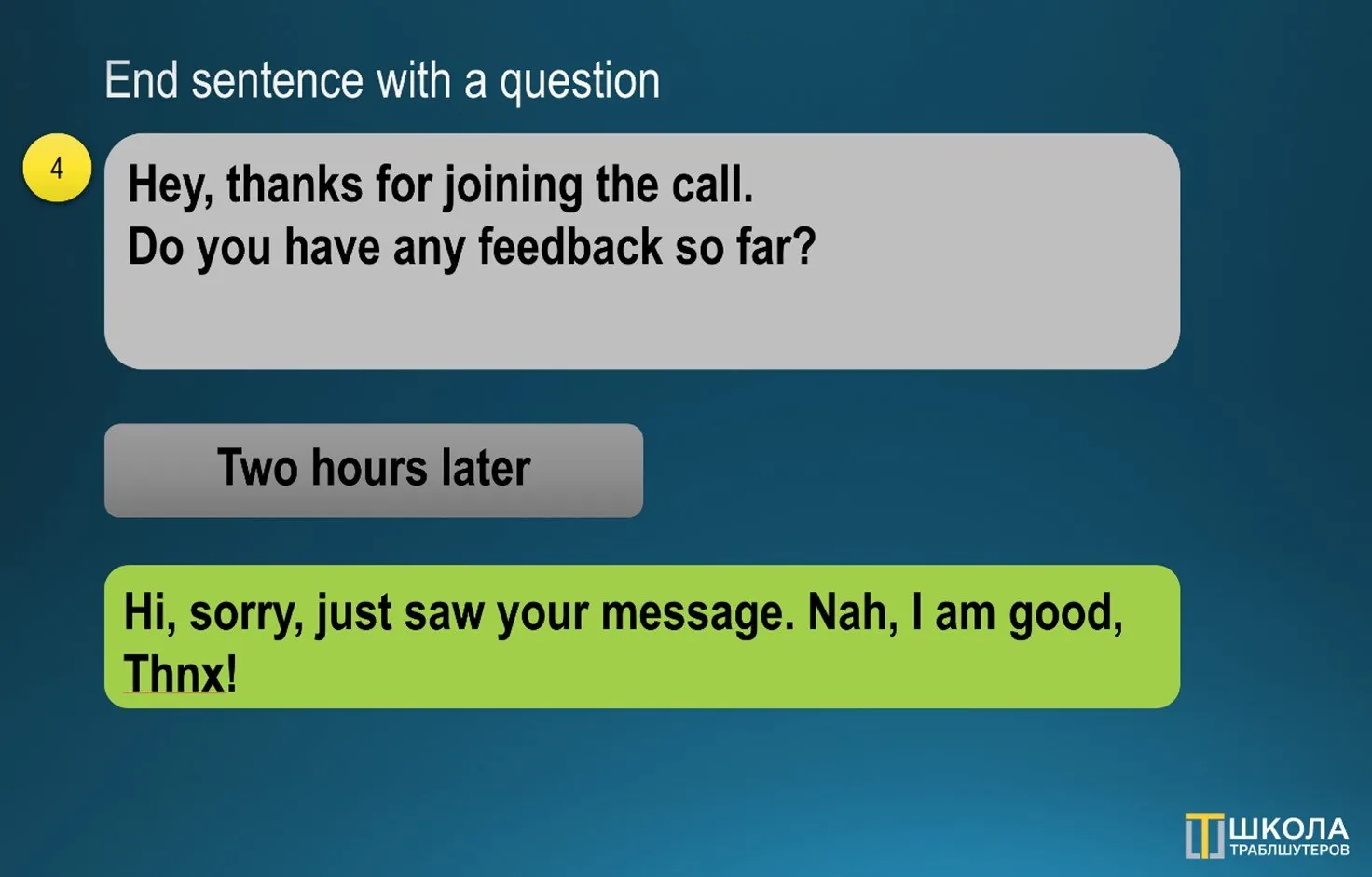
End sentence with a question. If you want the discussion to continue or checking whether information was perceived, request for the feedback. Sometimes we would use this to check the speed of responses of our colleagues, who we think might be abusing or hiding behind of the “work from anywhere” mode (4):
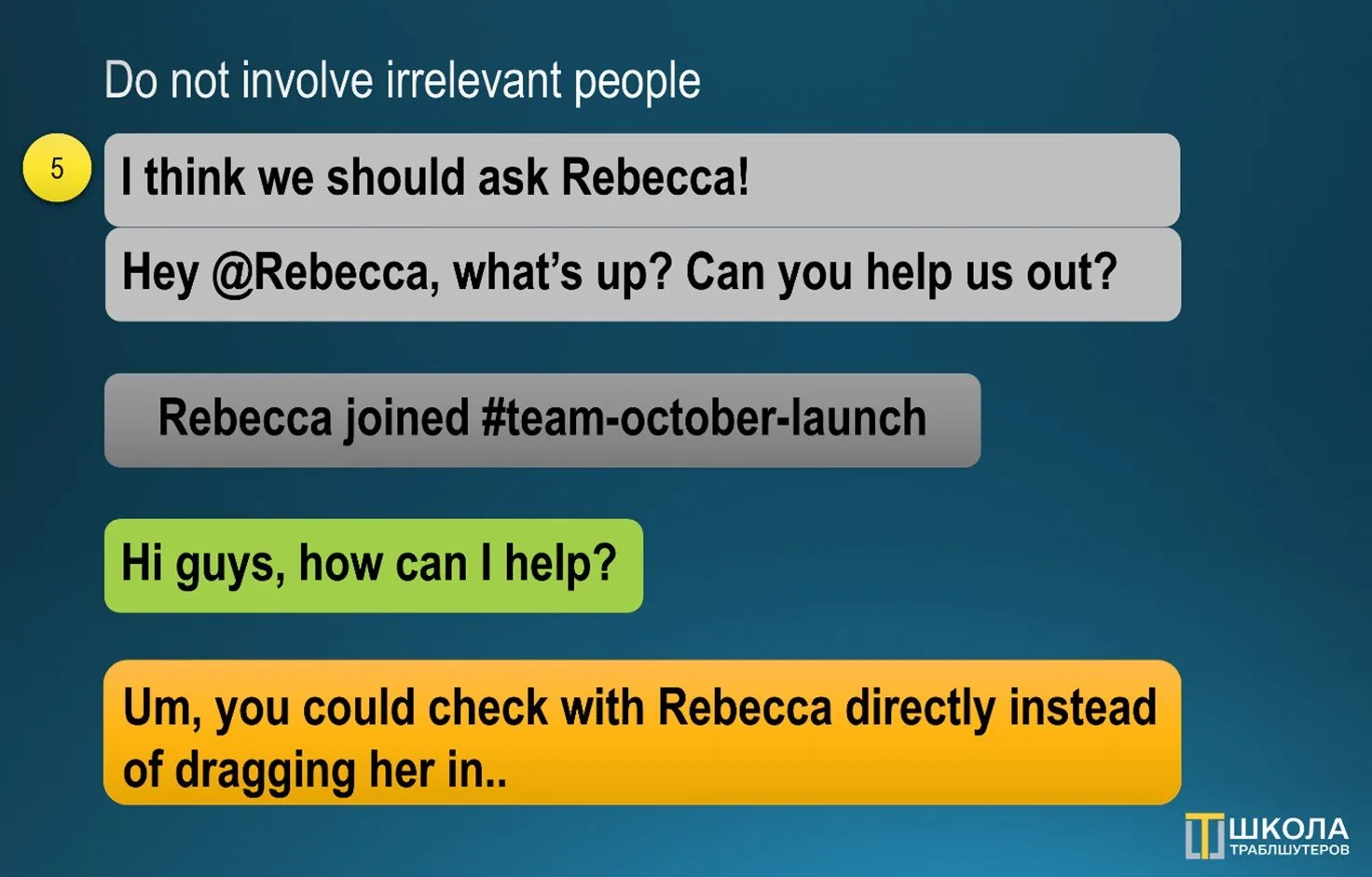
Do not involve irrelevant people. There is might be a temptation to drag someone into a discussion, to ask them a couple of questions. then their service won’t be needed yet presence will remain. Instead, make sure to check with them personally, provide enough to come back with the one-off educated answer (5):
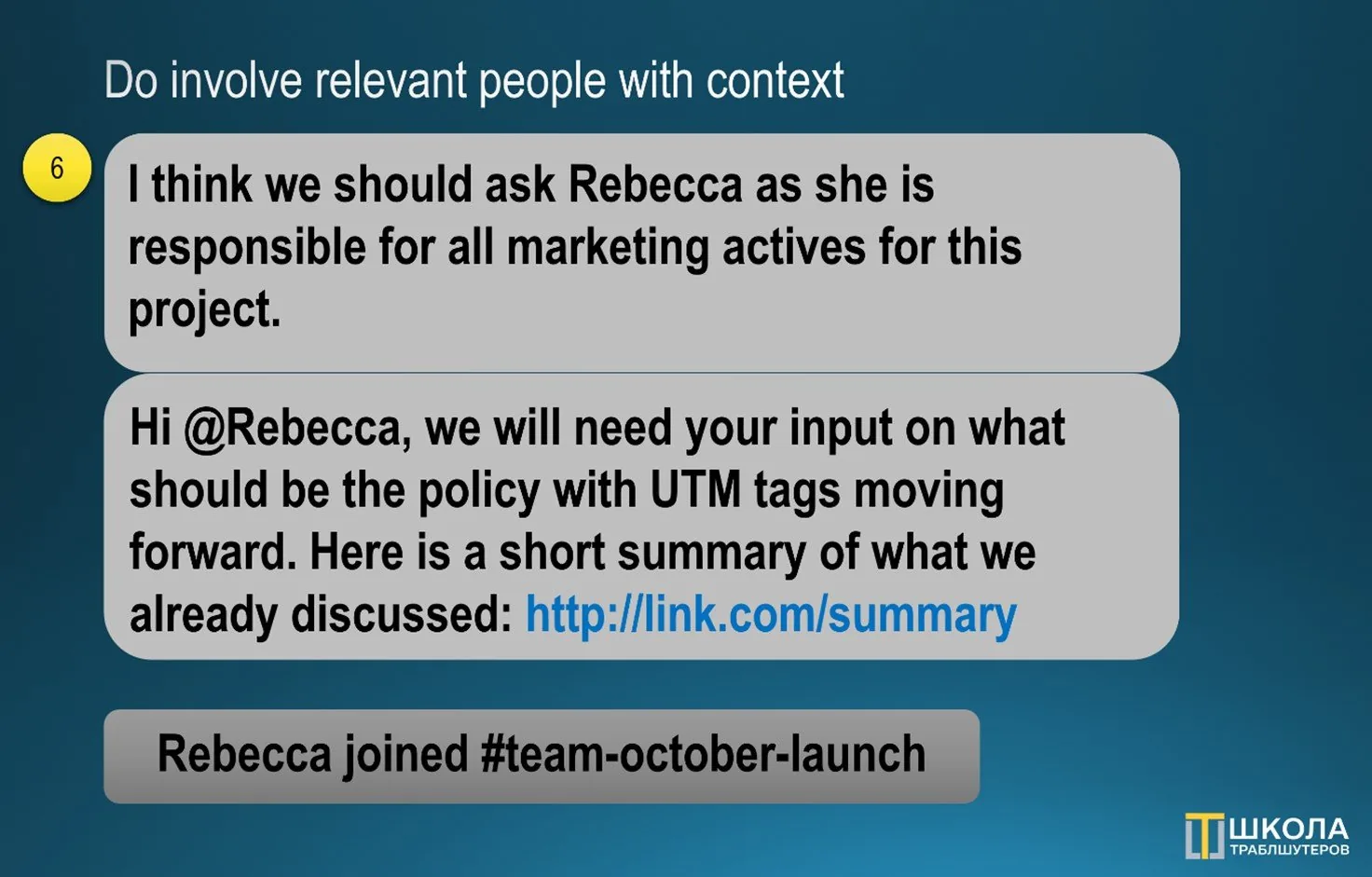
**Do involve relevant people with context. **If there is a stakeholder who is not part of the work stream, they should be there. Do the onboarding, explain what was discussed before, share all the information. Plan, as it`s rather a mistake than a norm, when one of the contributors, apparently was left behind (6):
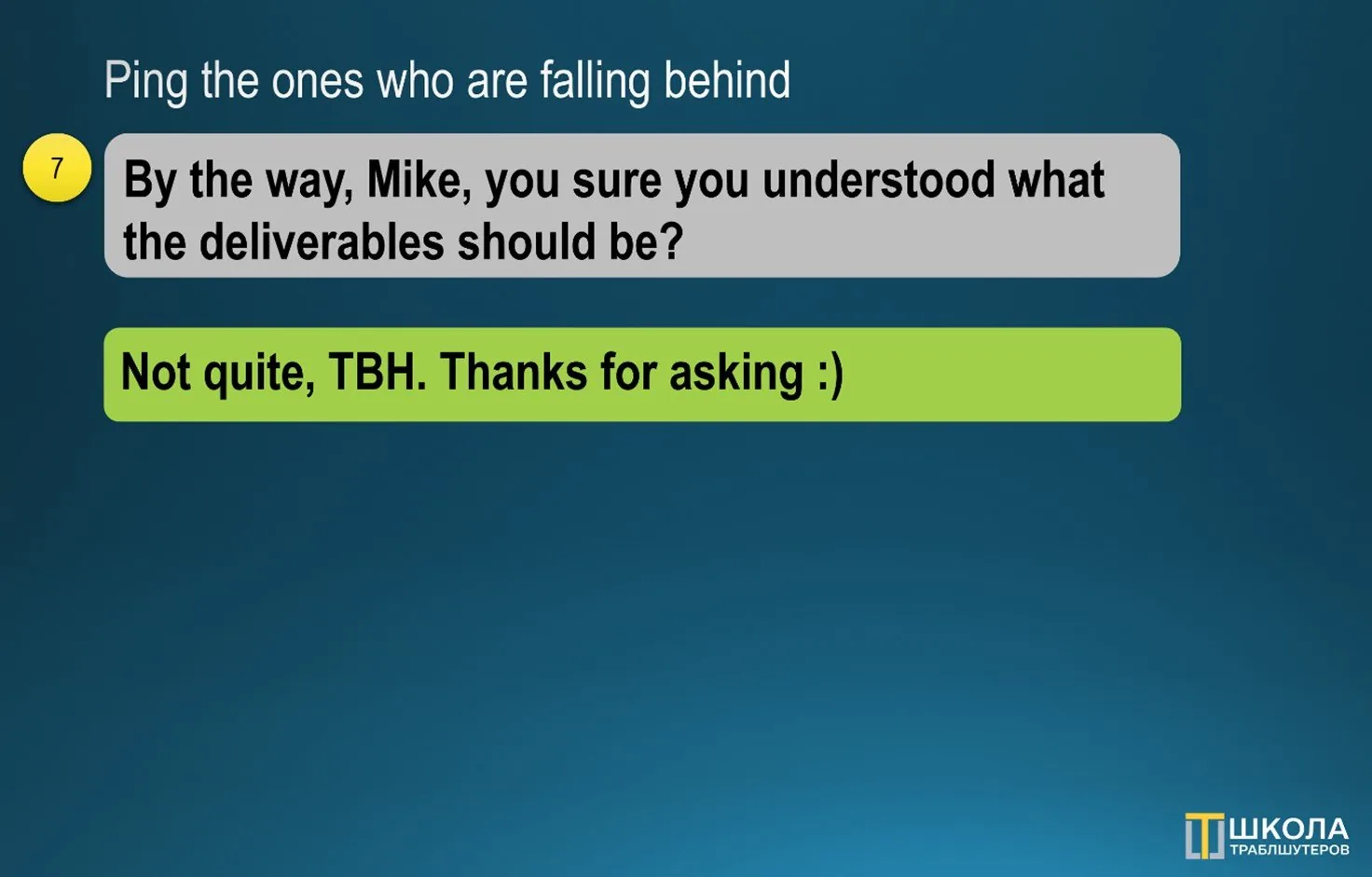
**Ping the ones who are falling behind. **In most of the cases people might get lost in where the group is are, whether there are any expectations from them personally or deadlines approaching. Indicate, help them to accomplish things and keep making sure that that an entire squad moves as fast as they can (7):
General discussions are in groups. If you get any question in the direct message, always think of few things: whether it could be useful for anyone else, can someone add more context to the topic, would you find this answer easily later. Encourage team to have such conversations in dedicated channels (8):
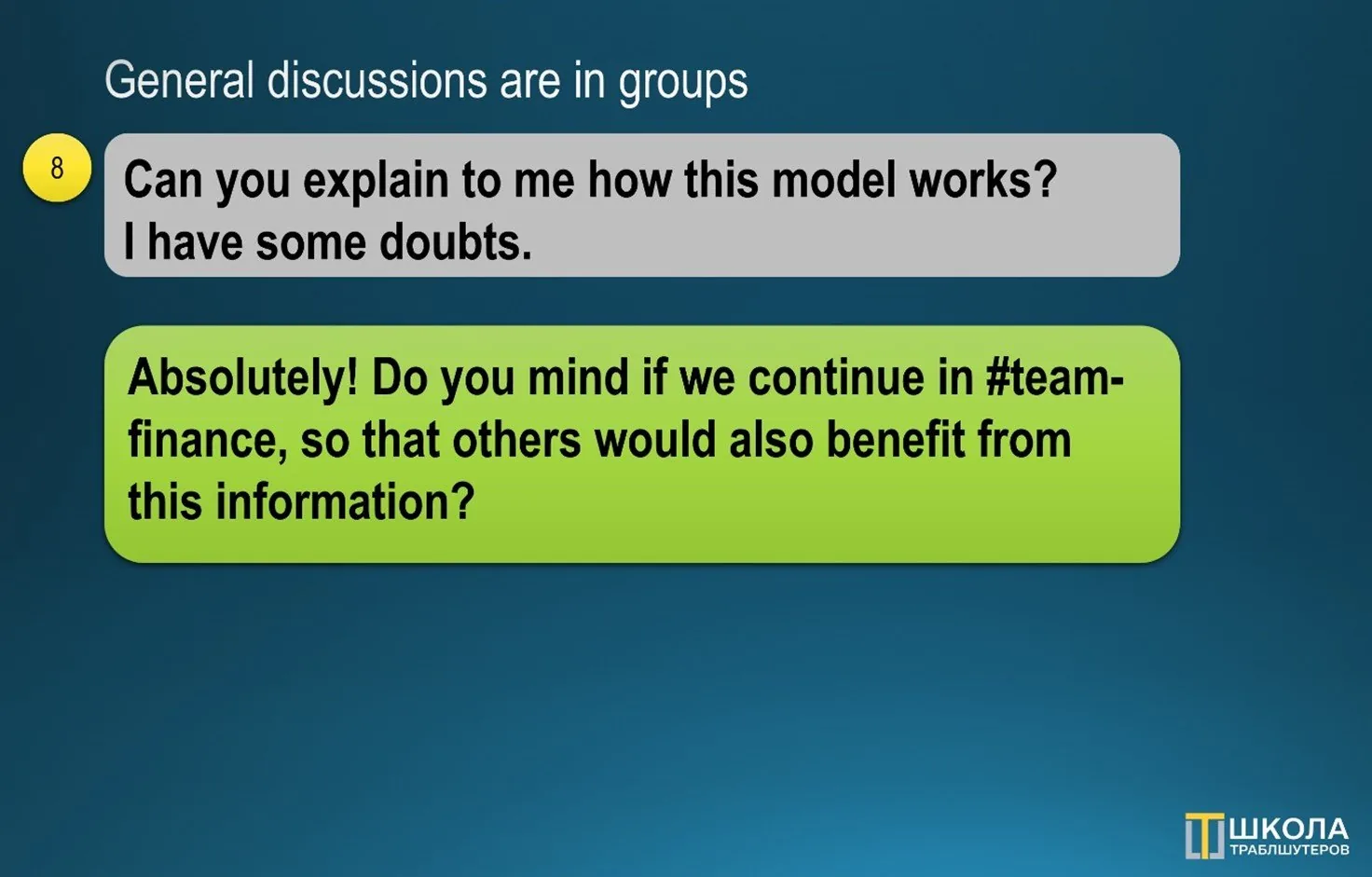
Personal discussions at 1-1. Vice versa, some conversations or even the way of speaking could be more suitable for direct messages if they related to something that is interest of only two of you. It will reduce the chance to other people get distracted or even start participating in the things they not supposed to be (9):
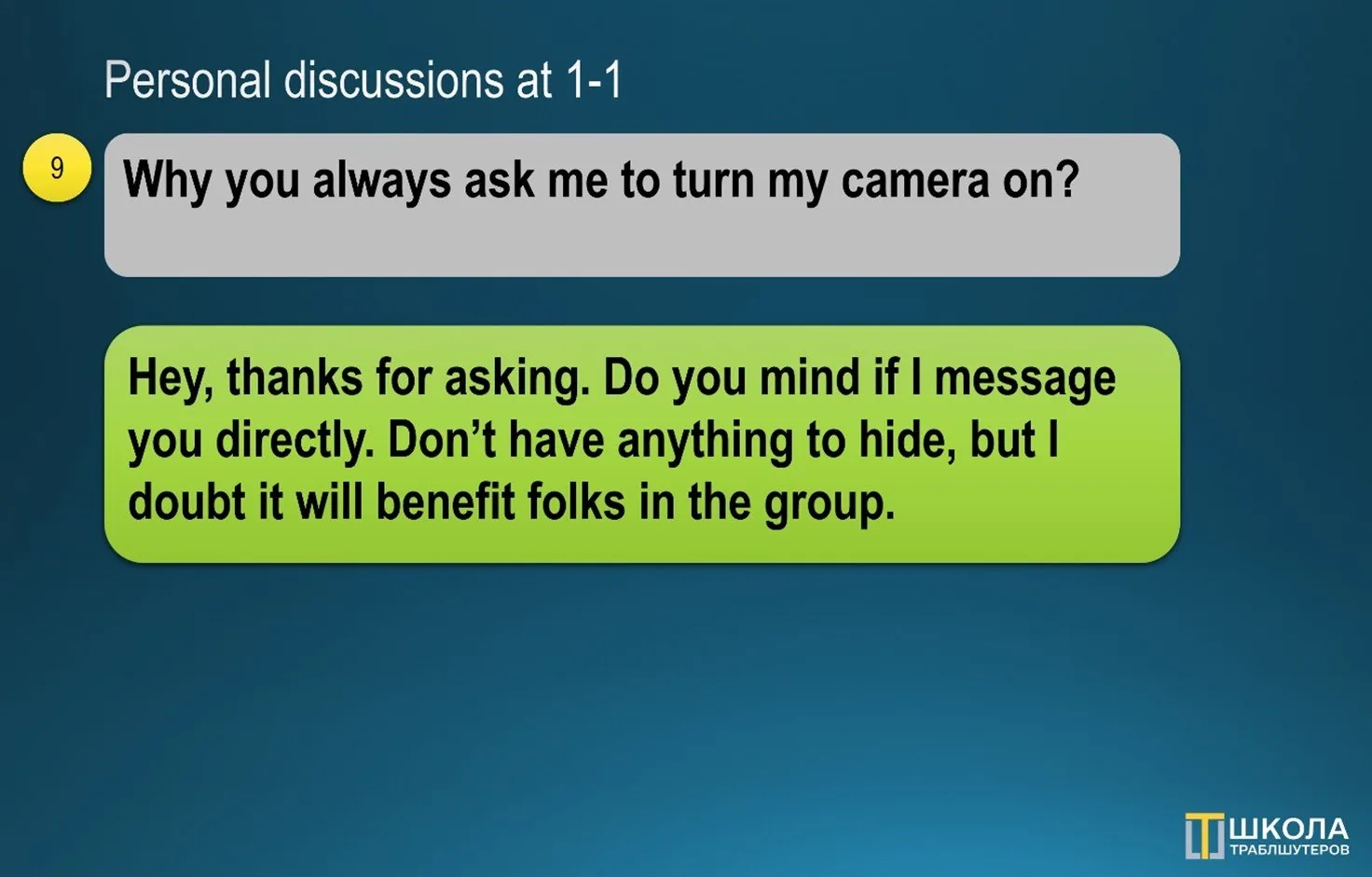
**Don’t get emotional, channel it. **There will be situations where you don’t agree, or get angry, impatient. Don’t show it. People may not mean what they said, and you may also would be observed by others who higher or more senior than you, and immediately can decide of you going to the next level or not (10):
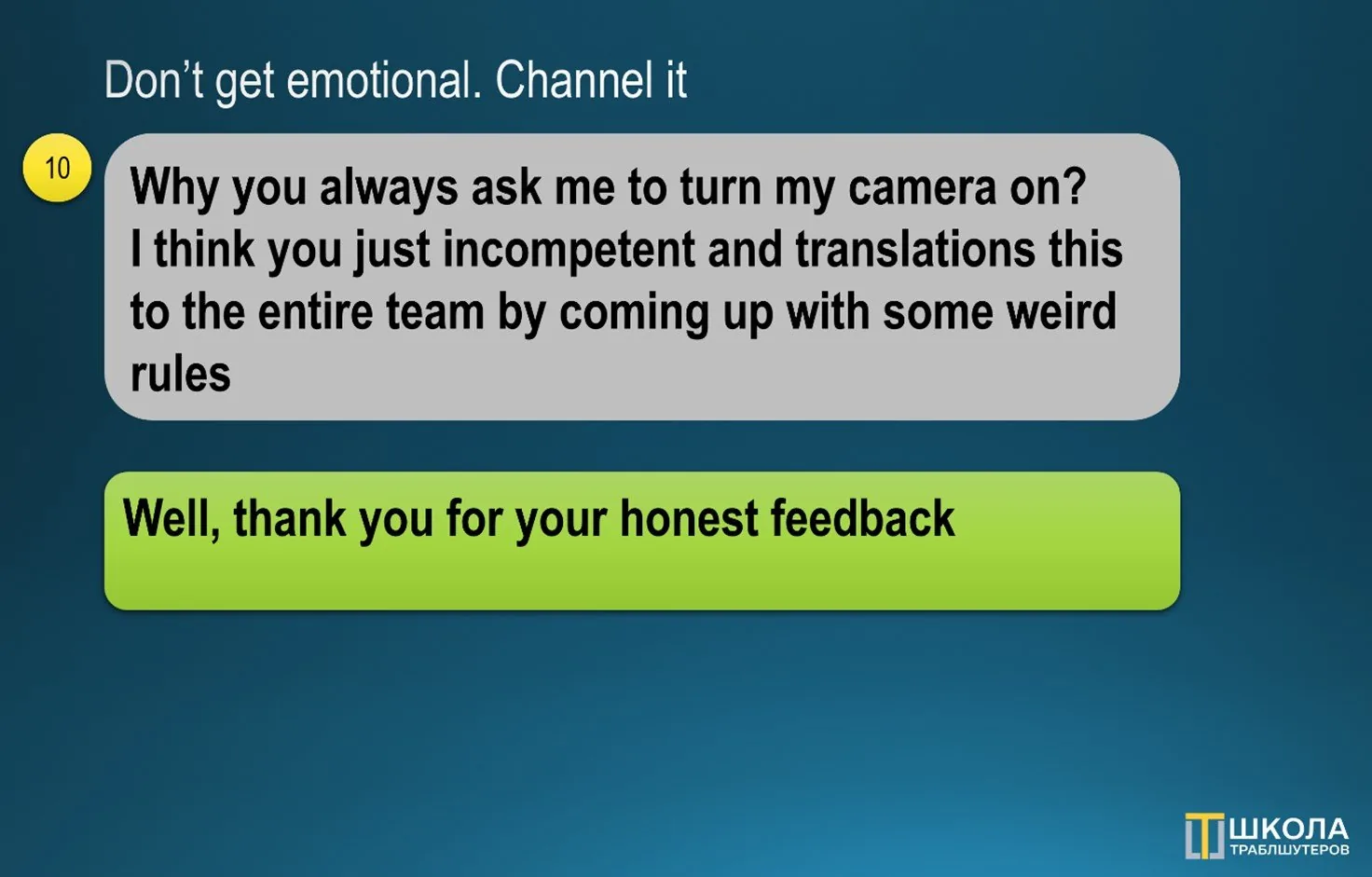
Turn the cameras on and mute the mics. When screens separate people it is easy to lose some non-verbal signs during the conversation. As a courtesy, it is important to let others people to read you, so that both parties engaged during the call. The quality of camera and mic matters too, get the good ones! (11):
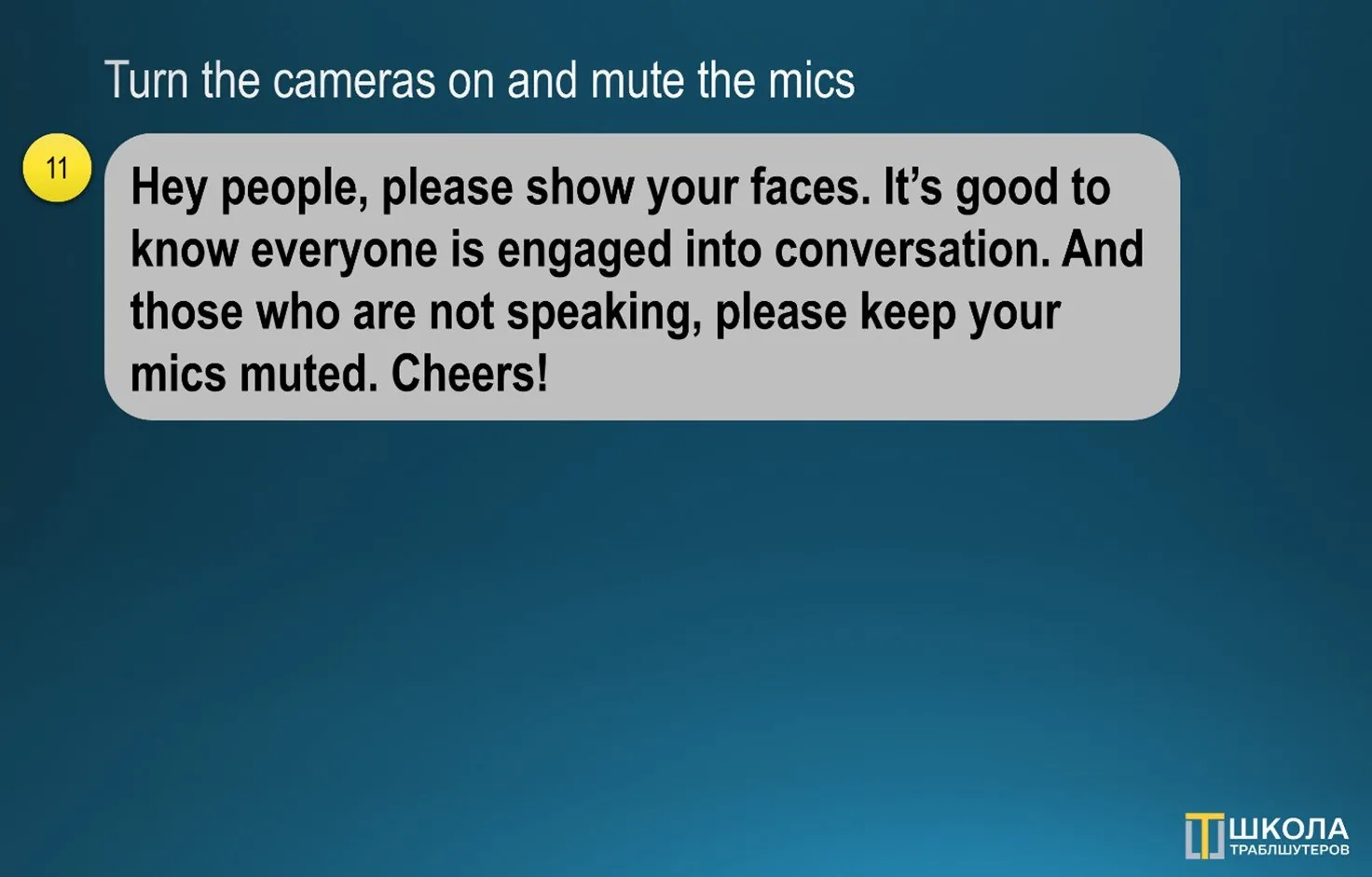
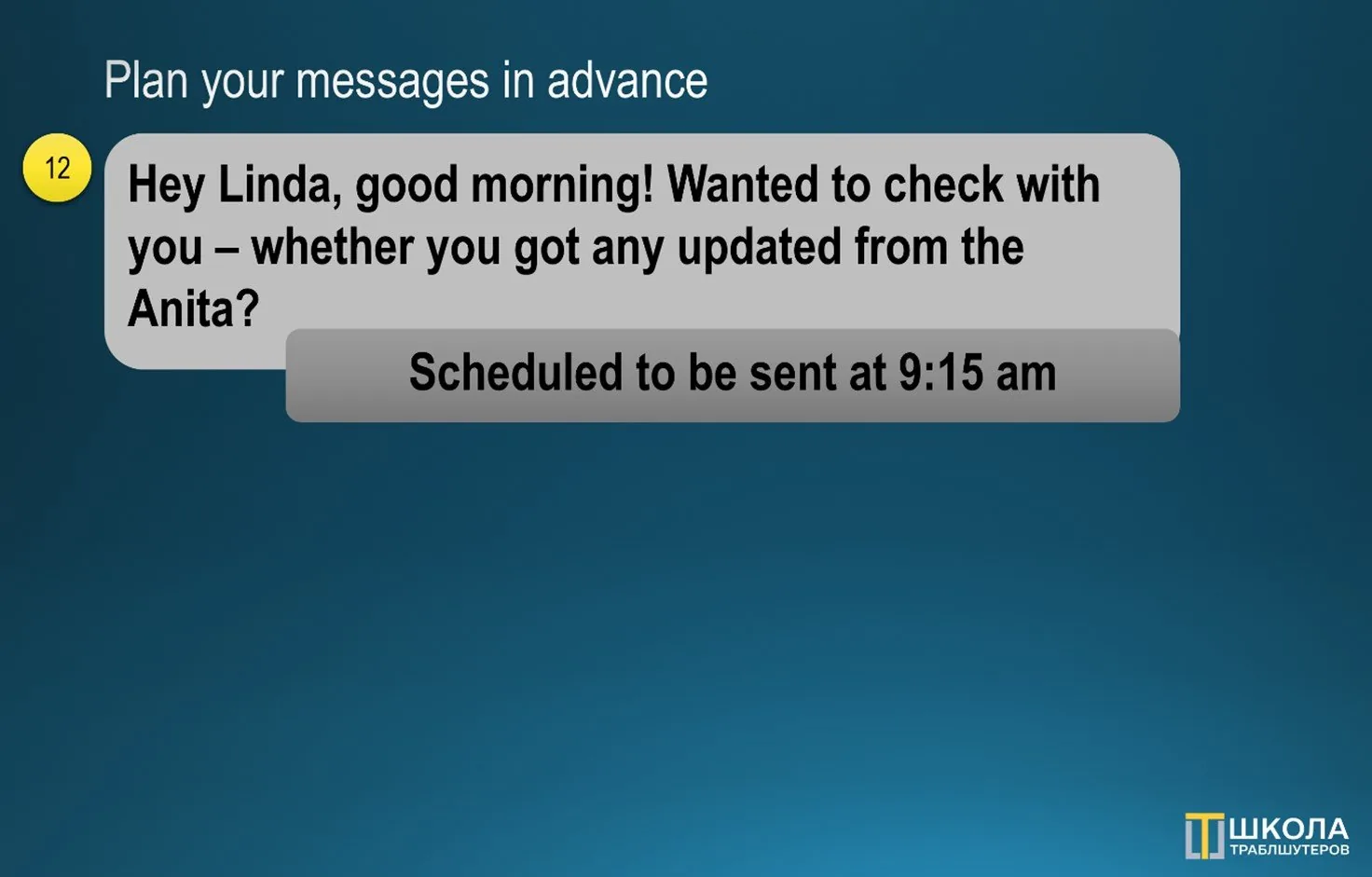
Plan your messages in advance. Thinking ahead is a great skill indeed, but it could bring a fruitful harvest if done well. Think of what you want to each person from team tomorrow, next week or month and then set your questions to be sent at once in a batch with others. It saves time, and gets you some kudos (12):
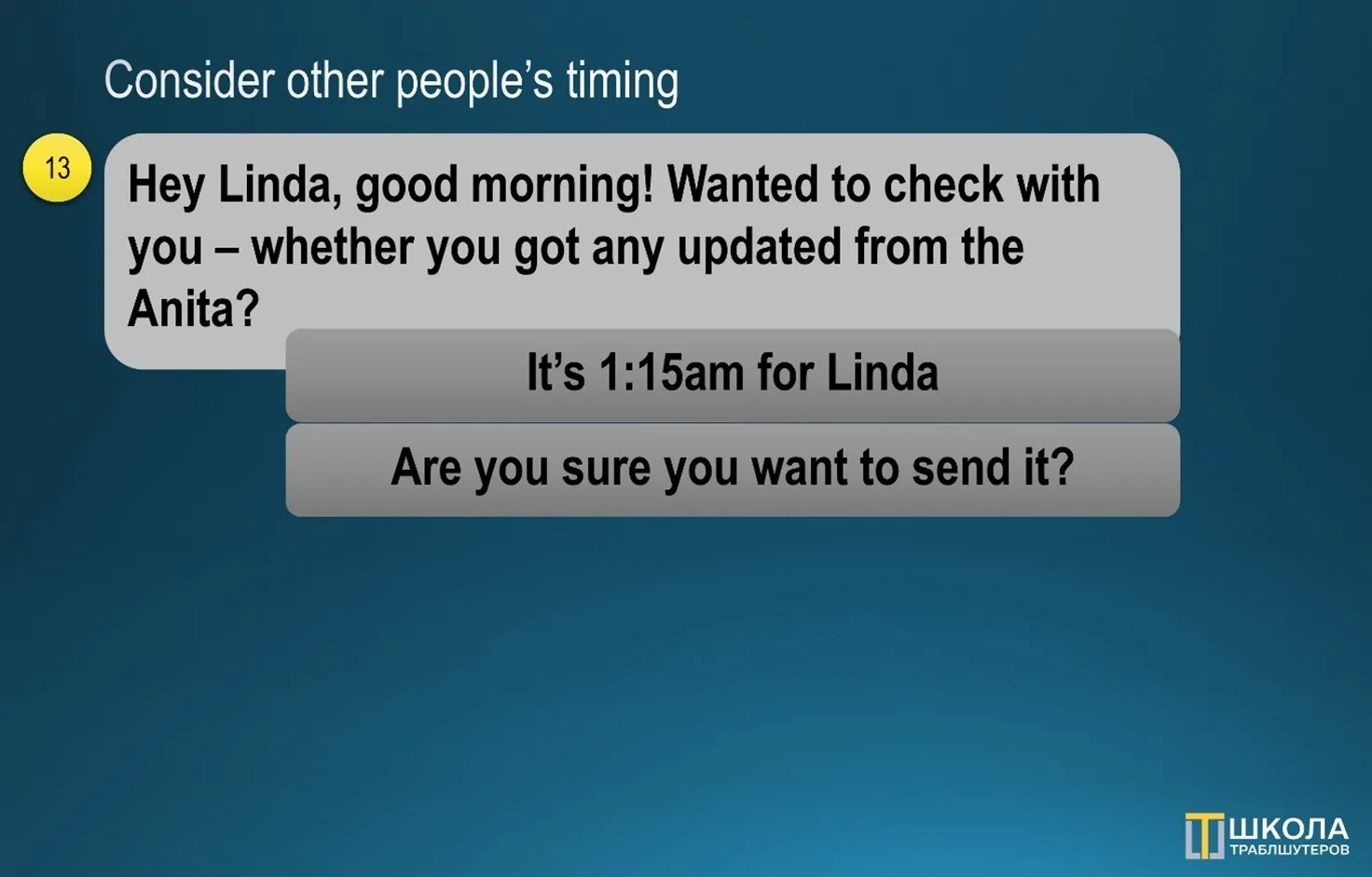
Consider other people’s timing. When sending a message, double check of what is the time of the day at receiving side. Aside of that, they may have some other things going on, as it may be seen on their calendars or at a messenger. Consider the real urgency, schedule if it’s ok to wait for them to respond (13):
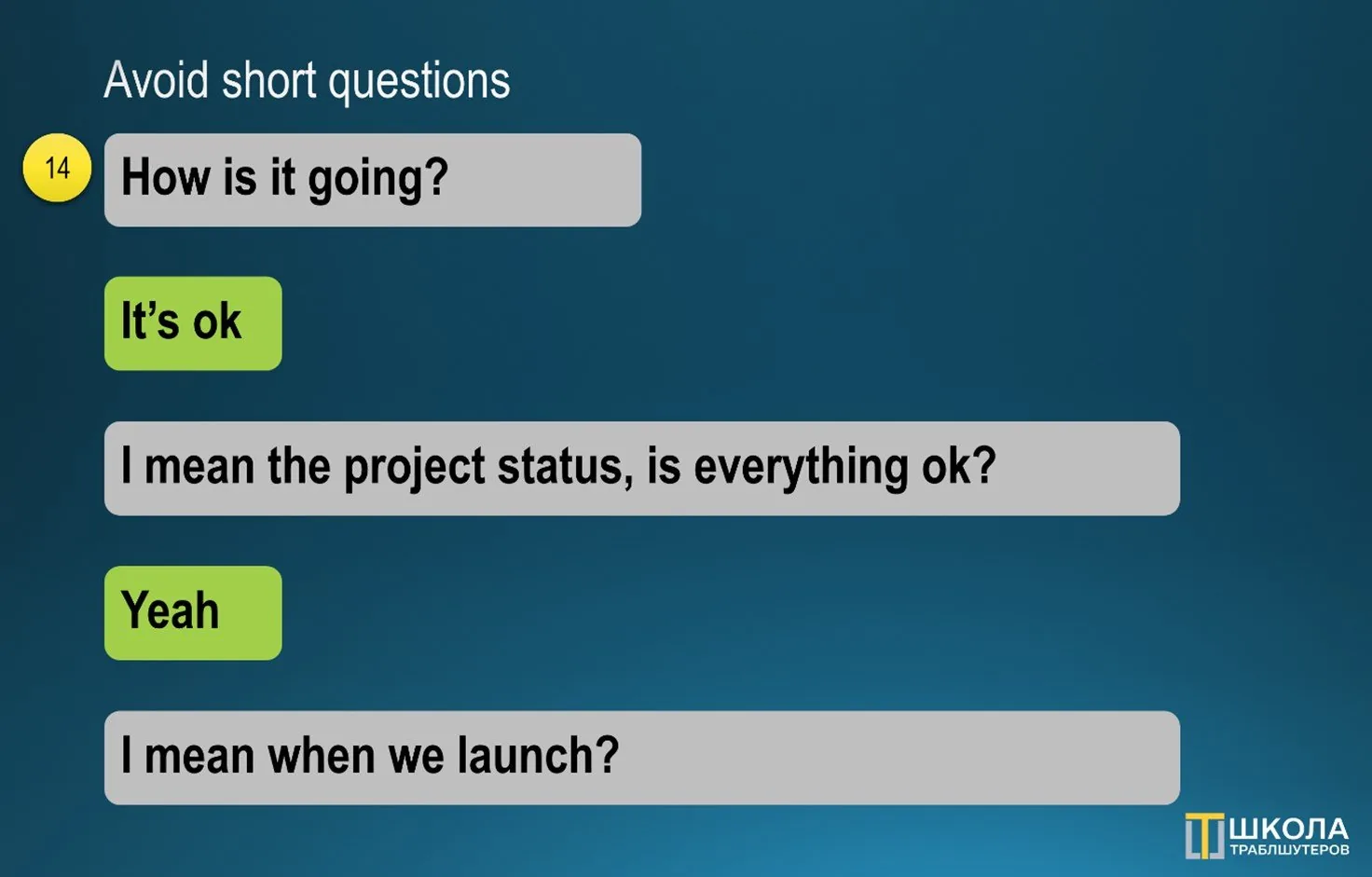
**Avoid short questions, be more detailed. **There is an exercise: try to answer your own inquiries by very formally. Then put yourself into the position of other people, and see if this would match with their expectations. Instead of saying “ok” when hearing “how is it going?”, return a more relevant answer (14):
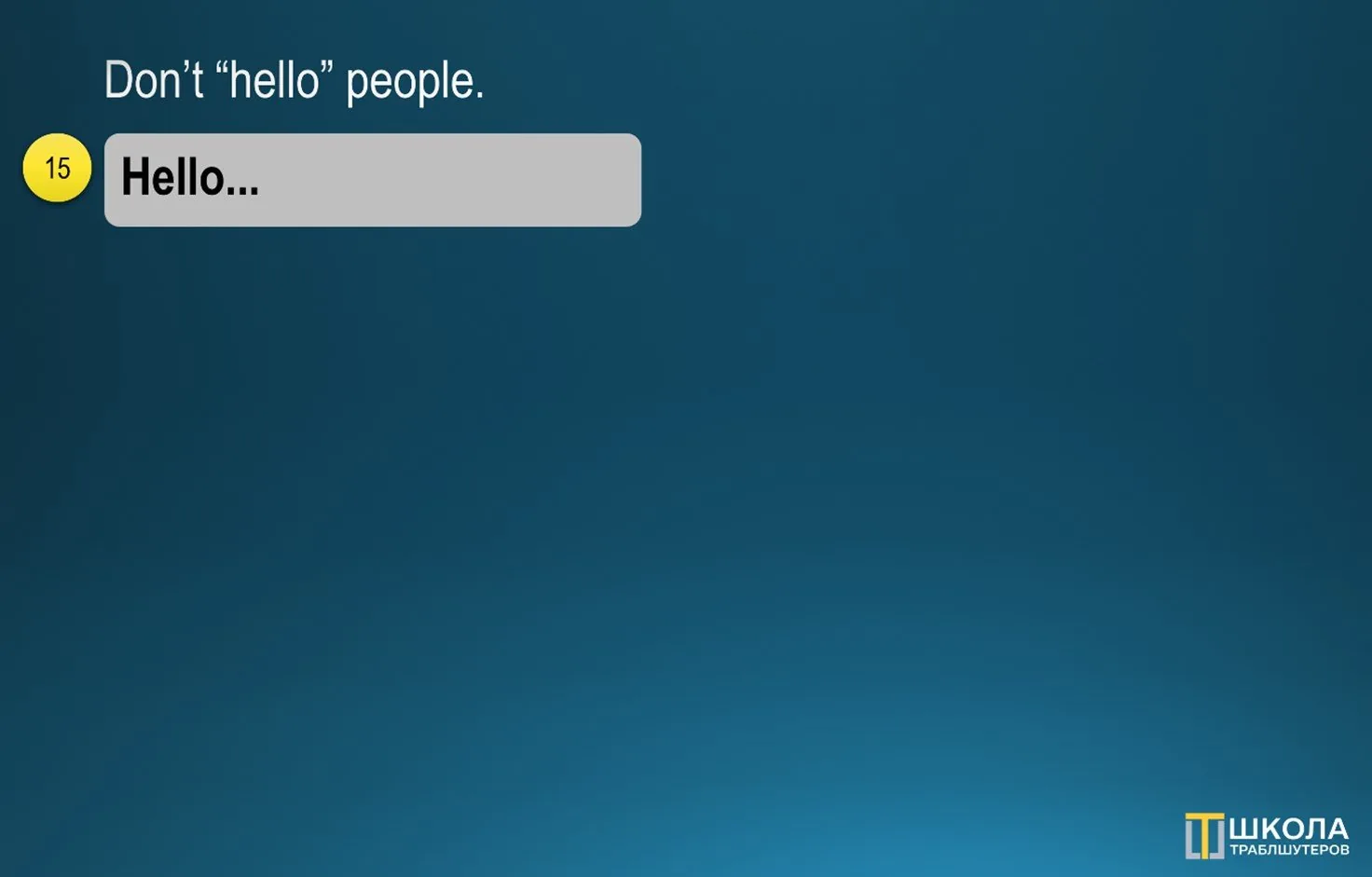
Don’t “hello” people. Given that your colleagues might be involved in different activities, it would get hard to get their undivided attention on the sport. Moreover, it may be seen as a lack of empathy and respect towards them, so when you say “A”, make sure to follow with a “B” and get to the business quickly (15):
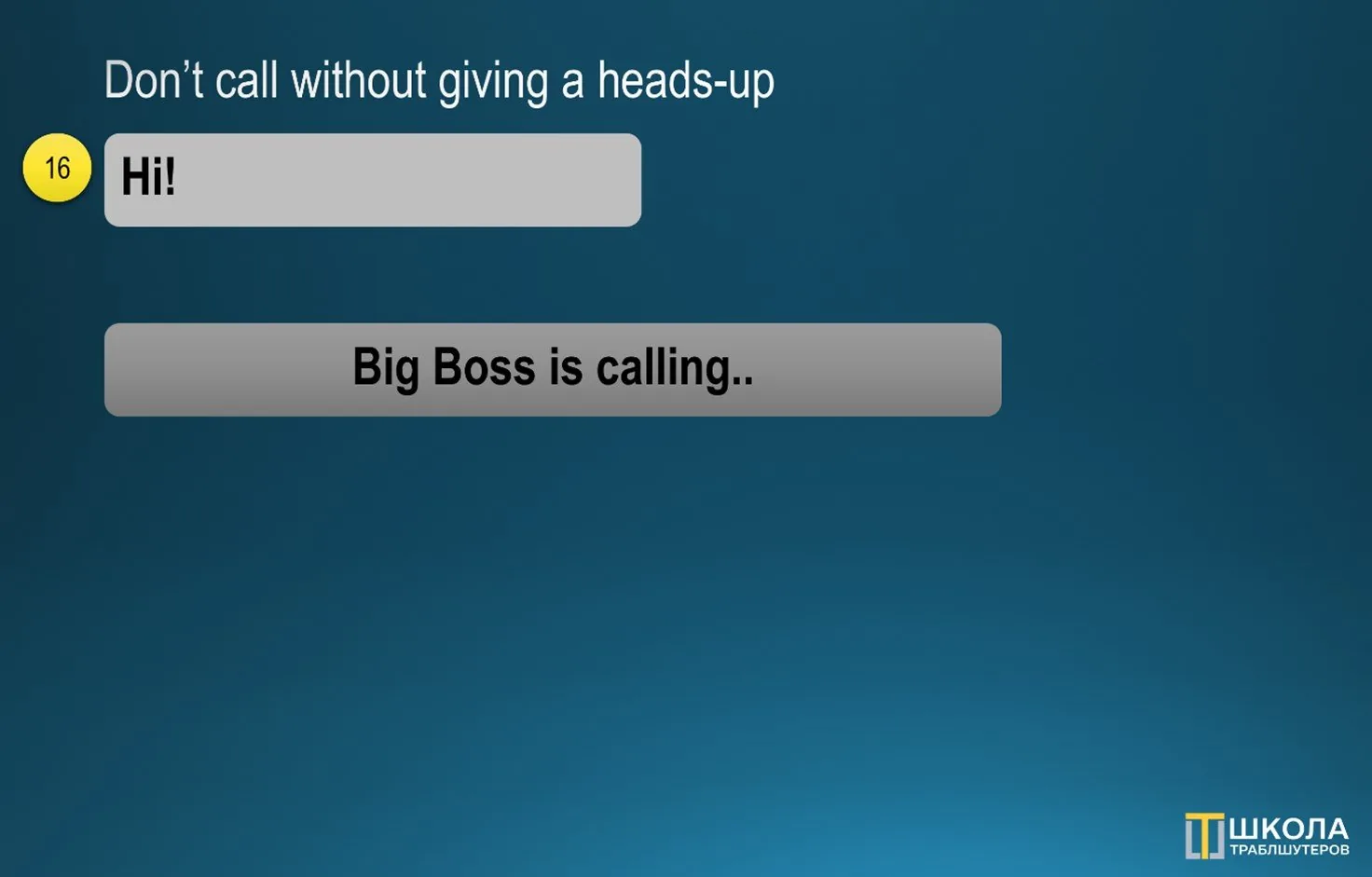
Don’t call without giving a heads-up. Imagine someone is in their “deep work” mode or already on another call speaking or presenting something right at this very moment. And suddenly they see your user picture smiling at them from the video call pop-up window, breaking their schedule or way of thoughts (16):
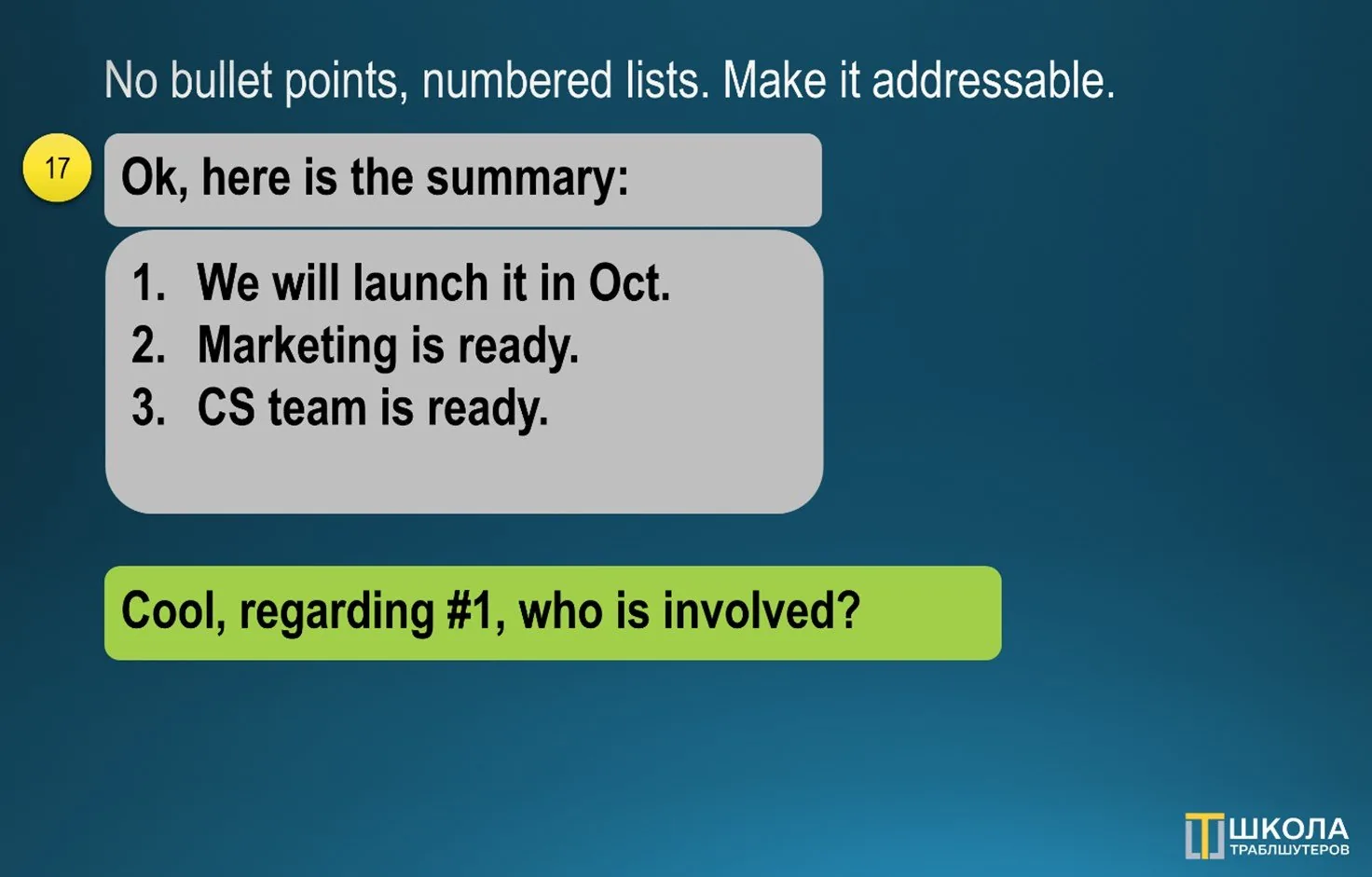
No bullet points, but numbered lists. Make it addressable. When the message is long and has different parts, make sure to not only mark each of it, but also add an index, so that when someone referrers to it, they can get an “id” without counting all items. Saves time, shows the structure, helps to interact with (17):
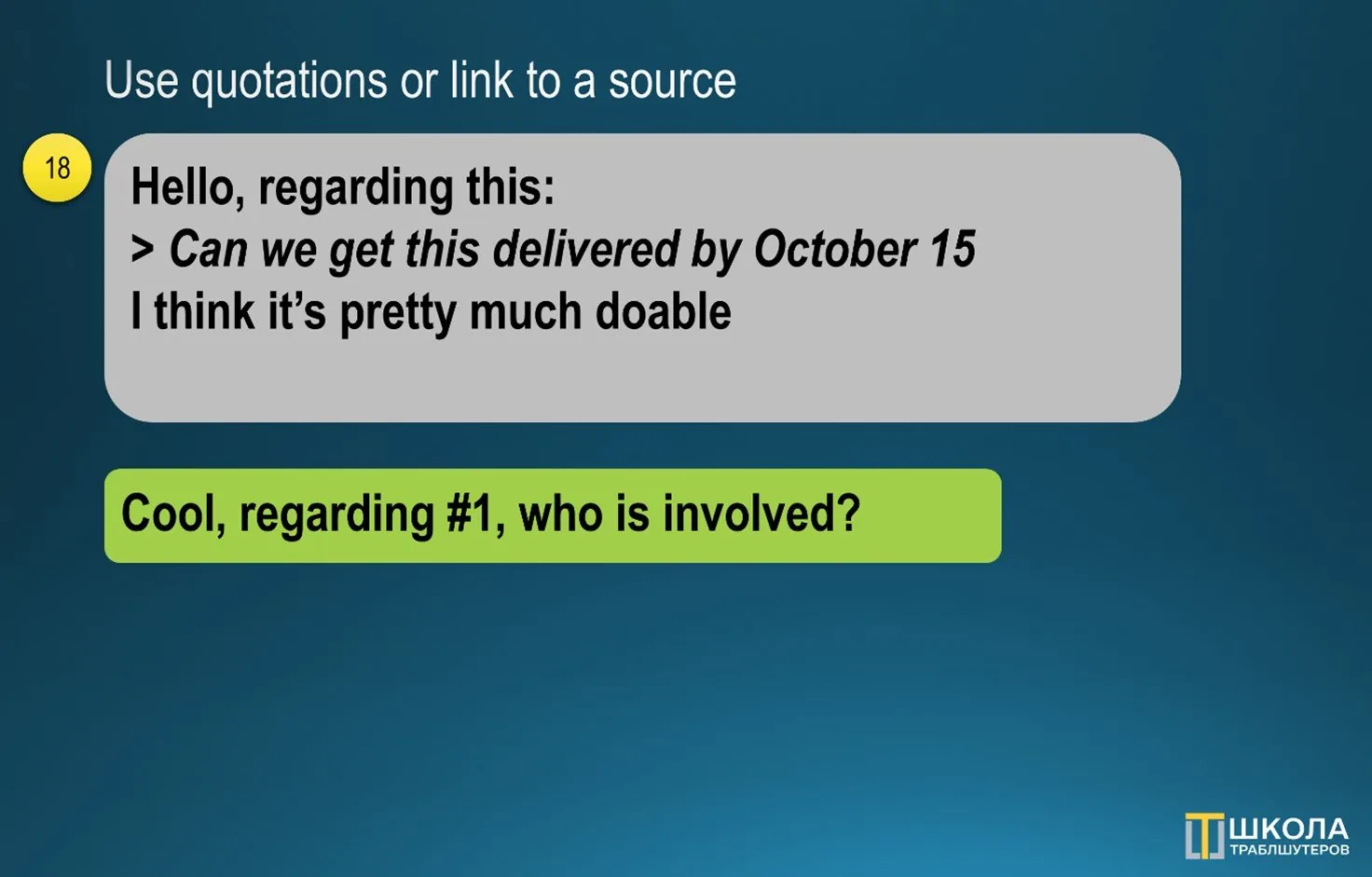
Use quotations or link to a source. The best way to relay someone’s words is to shared them directly, even if you speak with the same person. This would allow you to use another type of the addressability, making it easier to discuss things separately and review each quote one-by-one referring original (18):
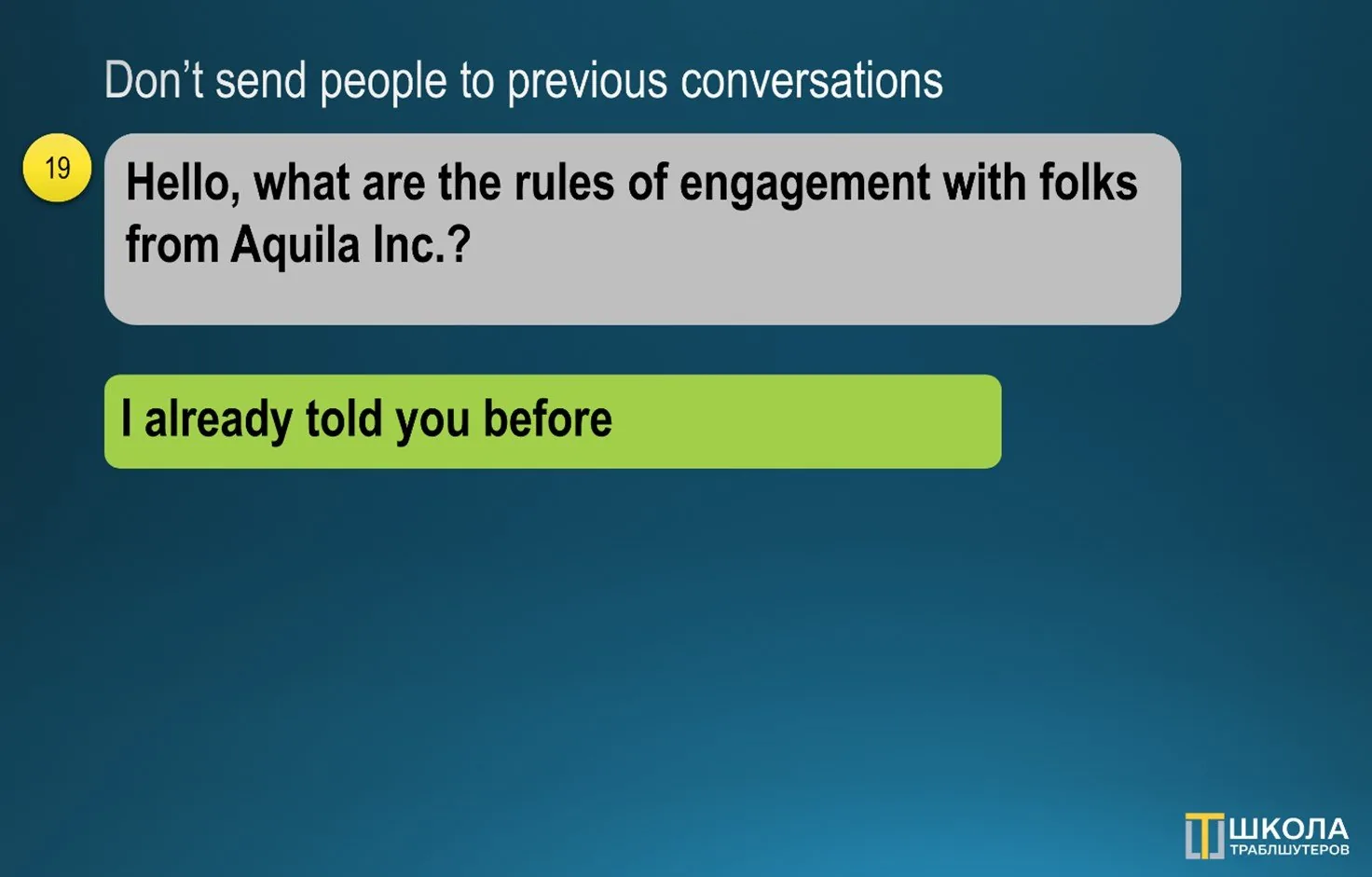
Don’t send people to previous conversations. Saying something like “I responded to it earlier” will make the person to embark into the expedition of finding your answers. Keep them handy, add to the existing message. If someone doesn’t have it or don’t remember, it means it wasn’t’ so clear for them first time (19):
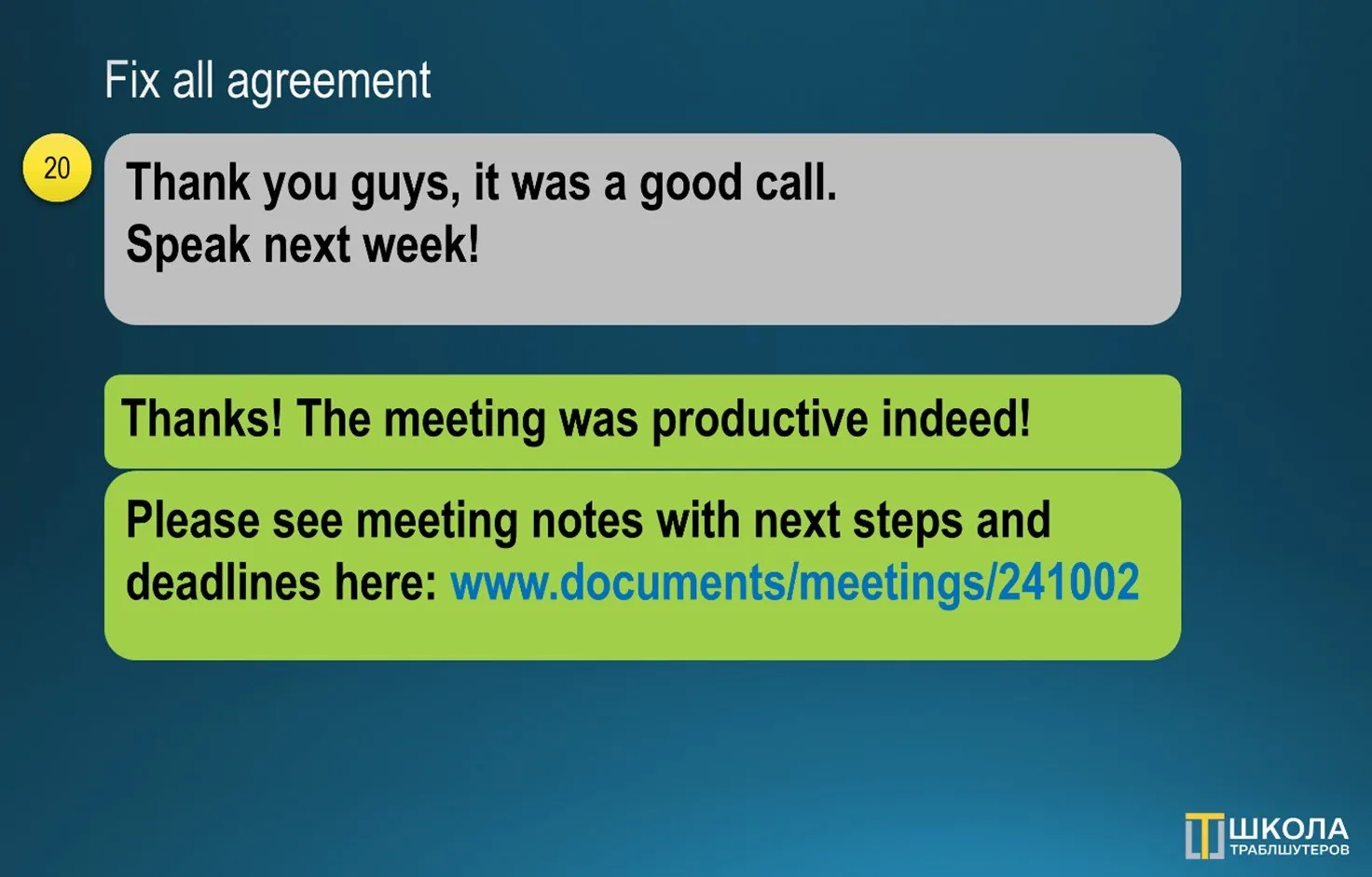
Fix all agreements. After you discuss and agree on something, it should be put on a paper. You lucky if your company which practices assigning scribes. Commonly, this role is not defined, so you step in, and circulate notes. Another way is to use specific channels or internal document system for sharing (20):